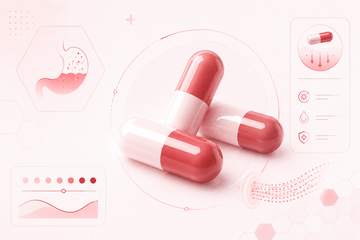
Clindamycin oral capsules are commonly described as an oral formulation of the lincosamide antibiotic clindamycin, with pharmacology centered on gastrointestinal absorption and subsequent systemic distribution. After oral administration, the capsule formulation encounters gastric and intestinal physiology before clindamycin enters the systemic circulation. This creates a pharmacokinetic pathway distinct from topical gel, cream, and solution formulations.
Systemic absorption concepts encompass dissolution, gastrointestinal transit, intestinal permeability, absorption into portal circulation, and subsequent distribution into systemic compartments. Gastrointestinal physiology can influence the conditions under which clindamycin becomes available for absorption, while hepatic metabolism contributes to systemic drug disposition. These processes are relevant to infections involving soft tissue and skin, where systemic antimicrobial exposure forms part of the pharmacologic context.
Systemic exposure variability reflects differences in absorption, distribution, metabolism, and elimination across individuals and clinical contexts. Pharmacokinetic interpretation can therefore incorporate gastrointestinal physiology, hepatic function, tissue distribution, protein binding, metabolic pathways, and clearance characteristics. Broader systemic pharmacology also encompasses adverse-effect and contraindication concepts, discussed separately in side-effects and contraindications resources.
Clindamycin oral capsules represent an oral pharmaceutical dosage form containing clindamycin, a lincosamide antibiotic whose systemic pharmacology involves gastrointestinal absorption followed by distribution and elimination. Capsule formulation characteristics influence the initial physical stages of drug delivery, including disintegration, dissolution, and release of the active pharmaceutical ingredient within the gastrointestinal tract. These formulation events precede pharmacokinetic processes such as absorption, plasma distribution, protein binding, metabolism, and clearance.
After release from the capsule, clindamycin encounters gastrointestinal compartments with differing pH, fluid composition, motility, epithelial architecture, and absorptive characteristics. Systemic exposure is therefore generated through a sequence of formulation and physiological processes rather than occurring as an isolated event. Infectious-disease contexts such as cellulitis, abscess, and infected wounds provide examples of conditions in which systemic antimicrobial pharmacology can be considered in relation to tissue distribution and inflammatory biology.
The oral capsule pathway contrasts with topical dosage forms because systemic pharmacokinetics become central to interpretation. Topical gel, cream, and solution formulations emphasize cutaneous deposition and local distribution, whereas oral capsules involve gastrointestinal physiology, systemic absorption, hepatic metabolism, tissue distribution, and elimination. This distinction provides a useful framework for understanding how the same active pharmaceutical ingredient can exhibit different pharmacologic behavior according to dosage form and anatomical route.
| Concept | Pharmacologic context | Relevant variable |
|---|---|---|
| Active ingredient | Clindamycin as a lincosamide antibiotic | Physicochemical and pharmacokinetic properties |
| Capsule formulation | Oral dosage form | Disintegration and dissolution |
| Gastrointestinal phase | Drug release and absorption | Transit, luminal conditions, and permeability |
| Systemic phase | Plasma and tissue distribution | Protein binding and distribution volume |
| Disposition | Metabolism and elimination | Hepatic metabolism and clearance |
Systemic absorption describes the movement of clindamycin from the gastrointestinal lumen into the systemic circulation. Following capsule disintegration and drug dissolution, absorption involves interaction with the gastrointestinal mucosa and transfer across epithelial barriers into portal blood. Pharmacokinetic concepts include dissolution, concentration gradients, membrane permeability, intestinal surface area, gastric emptying, intestinal transit, and the physicochemical properties of clindamycin.
Gastrointestinal absorption is influenced by physiological heterogeneity throughout the digestive tract. Gastric and intestinal pH, fluid volume, motility, epithelial integrity, luminal contents, and regional absorptive capacity contribute to the environment encountered by the active ingredient. Systemic exposure represents the integrated result of these processes and can subsequently be characterized through pharmacokinetic measures such as plasma concentration, exposure over time, distribution, and elimination.
Systemic absorption also establishes the connection between oral formulation and tissue pharmacology. After entering circulation, clindamycin can distribute beyond plasma into extracellular and tissue compartments. Infectious-disease contexts including MRSA, MSSA, and other bacterial infections involve relationships among antimicrobial susceptibility, tissue exposure, pathogen localization, and host inflammatory response. Clinicians may evaluate these pharmacologic dimensions as separate components of systemic drug behavior.
| Absorption concept | Primary site | Pharmacokinetic relevance |
|---|---|---|
| Capsule disintegration | Gastrointestinal lumen | Releases formulation components |
| Dissolution | Gastrointestinal fluid | Makes clindamycin available for absorption |
| Mucosal uptake | Gastrointestinal epithelium | Transfers drug into portal circulation |
| Portal transport | Portal venous system | Connects intestinal absorption with hepatic disposition |
| Systemic circulation | Plasma and blood compartments | Enables tissue distribution and systemic exposure |
Gastrointestinal physiology provides the first major biological environment encountered by clindamycin after oral capsule administration. Gastric emptying, intestinal transit, luminal pH, fluid composition, epithelial permeability, mucosal surface area, and regional blood flow can influence the sequence of dissolution and absorption. These variables help explain why oral pharmacokinetics depend on both pharmaceutical formulation and physiological conditions within the gastrointestinal tract.
Following intestinal absorption, portal circulation connects the gastrointestinal tract with the liver, making hepatic metabolism an important component of systemic drug disposition. Hepatic metabolism involves uptake into hepatocytes, enzymatic biotransformation, metabolite formation, and subsequent routes of elimination. Protein binding and hepatic blood flow can also contribute to pharmacokinetic interpretation. The resulting systemic concentration profile reflects the combined influence of absorption, distribution, metabolism, and elimination.
These gastrointestinal and hepatic processes are relevant to systemic treatment contexts involving bacterial infections such as dental infection, bone infection, and joint infection. Such conditions can involve different tissue compartments and inflammatory environments. Pharmacology references commonly discuss the distinction between gastrointestinal input, hepatic disposition, systemic exposure, and tissue distribution when describing the behavior of orally administered clindamycin.
| Factor | Physiological compartment | Pharmacokinetic relevance |
|---|---|---|
| Gastric emptying | Stomach to small intestine | Influences timing of intestinal drug exposure |
| Intestinal transit | Small and large intestine | Influences contact with absorptive mucosa |
| Mucosal permeability | Intestinal epithelium | Contributes to systemic uptake |
| Portal circulation | Gastrointestinal tract to liver | Connects absorption with hepatic disposition |
| Hepatic metabolism | Hepatocytes and hepatic circulation | Contributes to systemic clearance |
Systemic exposure variability describes differences in the amount and temporal distribution of clindamycin present within systemic circulation and tissues. Pharmacokinetic variability can arise from gastrointestinal absorption, bioavailability, distribution volume, plasma protein binding, hepatic metabolism, renal and nonrenal elimination, and individual physiological characteristics. These variables can alter concentration-time relationships without reducing systemic pharmacology to a single determinant.
Tissue distribution introduces another layer of variability because clindamycin moves from circulating plasma into extracellular and tissue compartments according to physicochemical properties, perfusion, protein binding, tissue composition, and local inflammatory conditions. Infectious processes such as soft-tissue infection, cellulitis, and abscess can involve different anatomical environments, making tissue pharmacology distinct from plasma pharmacokinetics.
Systemic exposure and inflammatory response are related but conceptually separate domains. A concentration-time profile describes pharmacokinetic exposure, whereas fever, erythema, swelling, tenderness, and other inflammatory manifestations reflect host biological responses. Symptom perception can vary independently of measured drug concentrations. Clinicians may evaluate these distinctions when interpreting systemic pharmacology, while dosage-specific concepts can be examined separately through pages concerning soft-tissue dosage concepts, bone dosage concepts, and joint dosage concepts.
| Variability factor | Pharmacokinetic domain | Potential effect on interpretation |
|---|---|---|
| Gastrointestinal physiology | Absorption | Changes systemic drug input |
| Protein binding | Distribution | Influences free and bound drug fractions |
| Tissue perfusion | Distribution | Affects movement into tissue compartments |
| Hepatic metabolism | Disposition | Influences circulating drug concentrations |
| Inflammatory state | Tissue environment | Creates biological heterogeneity independent of exposure |
Neutral interaction concepts describe the pharmacologic framework in which clindamycin may coexist with other medicines, foods, physiological factors, or disease-related variables without assigning a specific interaction claim. Relevant domains include gastrointestinal absorption, hepatic enzyme activity, protein binding, transporter behavior, distribution, metabolism, elimination, and pharmacodynamic relationships. These concepts distinguish theoretical interaction mechanisms from demonstrated clinical effects.
Gastrointestinal interactions may involve changes in luminal conditions, gastric or intestinal transit, dissolution, or mucosal absorption. Systemic interactions may involve metabolic pathways, hepatic clearance, protein binding, or tissue distribution. Pharmacodynamic interactions concern relationships between antimicrobial activity and host or pathogen biology. Infectious-disease contexts such as anaerobic infection and dental infection can provide different settings in which systemic pharmacology is interpreted.
Route comparison further clarifies interaction concepts. Oral clindamycin capsules involve gastrointestinal and systemic pharmacokinetics, while topical gel, topical cream, and topical solution involve different anatomical delivery pathways. Interaction analysis therefore depends on formulation, route, exposure compartment, mechanism, and pharmacologic endpoint. Often discussed in pharmacology references, these distinctions provide a neutral framework without assuming that every theoretical interaction produces a clinically meaningful outcome.
| Interaction domain | Primary pharmacologic process | Conceptual relevance |
|---|---|---|
| Gastrointestinal | Dissolution and absorption | May influence systemic drug input |
| Hepatic | Metabolic transformation | May influence systemic disposition |
| Protein binding | Drug distribution | Influences free and bound fractions |
| Pharmacodynamic | Drug and biological target relationships | Concerns effects at the biological level |
| Route-related | Topical versus oral delivery | Changes the primary exposure compartment |
Clinical interpretation of oral clindamycin pharmacology commonly integrates formulation characteristics, gastrointestinal physiology, systemic absorption, hepatic metabolism, tissue distribution, inflammatory biology, and pharmacokinetic variability. Infectious-disease classification provides additional context because different infections involve different anatomical compartments and pathogen profiles. Examples include skin infection, infected wounds, bone infection, and joint infection, each representing distinct tissue environments.
Inflammatory response patterns are not direct substitutes for systemic exposure measurements. Fever, pain, erythema, swelling, drainage, tenderness, and functional changes can reflect host immune activity, tissue injury, pathogen burden, or remodeling processes. Symptom perception can therefore vary independently of plasma concentration or pharmacokinetic exposure. Distinguishing pharmacokinetic, microbiologic, inflammatory, and perceptual domains creates a more precise framework for describing systemic antimicrobial pharmacology.
Clinicians may evaluate systemic interpretation through multiple pharmacologic dimensions, including absorption, distribution, metabolism, elimination, antimicrobial susceptibility, tissue penetration, and temporal changes in inflammatory findings. Separate resources addressing side-effect concepts, allergy concepts, and contraindication concepts represent additional classification domains. Together, these concepts position oral clindamycin capsules within a broader systemic pharmacology architecture rather than treating capsule formulation as an isolated pharmaceutical characteristic.
| Interpretation factor | Domain | Pharmacologic relevance |
|---|---|---|
| Infection classification | Anatomical and microbiologic context | Defines the tissue and pathogen environment |
| Systemic exposure | Pharmacokinetics | Describes circulating and tissue drug availability |
| Inflammatory response | Host biology | Reflects biological activity distinct from concentration |
| Symptom perception | Patient-reported experience | May vary independently of pharmacokinetic exposure |
| Disposition | Metabolism and elimination | Shapes systemic concentration over time |
Clindamycin oral capsule concepts describe the relationship among the capsule dosage form, gastrointestinal drug release, systemic absorption, tissue distribution, metabolism, and elimination. The terminology commonly encompasses formulation behavior, gastrointestinal physiology, plasma pharmacokinetics, hepatic metabolism, protein binding, systemic exposure, and tissue penetration. These concepts provide a framework for understanding clindamycin as an orally administered systemic antimicrobial formulation.
Systemic absorption refers to movement of clindamycin from the gastrointestinal tract into circulating blood. It follows capsule disintegration and drug dissolution and involves gastrointestinal mucosal transport into portal circulation. Systemic absorption establishes the pharmacokinetic input that precedes distribution into plasma and tissues. Pharmacology references commonly describe absorption as one component of the broader sequence of absorption, distribution, metabolism, and elimination.
Gastrointestinal physiology encompasses gastric emptying, intestinal transit, luminal pH, fluid composition, epithelial permeability, mucosal surface area, and regional blood flow. These variables influence the environment encountered by clindamycin after capsule disintegration and dissolution. Differences in gastrointestinal conditions can therefore contribute to systemic exposure variability. The gastrointestinal tract represents the initial biological compartment in the pharmacokinetic pathway for oral clindamycin.
Hepatic metabolism refers to biochemical transformation of clindamycin and its metabolites within the liver. After gastrointestinal absorption, portal circulation connects the intestinal tract with hepatic tissue, making hepatic disposition an important component of systemic pharmacokinetics. Metabolic activity, hepatic blood flow, protein binding, and subsequent elimination pathways can influence circulating concentrations and the overall time course of systemic clindamycin exposure.
Systemic exposure variability can arise from differences in gastrointestinal absorption, bioavailability, distribution volume, protein binding, hepatic metabolism, and elimination. Physiological characteristics and tissue conditions can add further heterogeneity. Pharmacokinetic exposure is therefore commonly represented as a concentration-time relationship rather than a single static value. These differences help explain why systemic drug behavior involves multiple interacting biological and pharmaceutical determinants.
Inflammatory response patterns reflect host biological activity associated with infection, tissue injury, and immune signaling. Findings such as fever, erythema, swelling, tenderness, and drainage can change independently of measured systemic drug concentrations. Pharmacology therefore distinguishes inflammatory response from pharmacokinetic exposure. This distinction allows antimicrobial drug levels, pathogen characteristics, tissue distribution, and host inflammatory biology to be considered as related but separate domains.
Symptom perception can vary because subjective experiences do not directly represent plasma concentration or tissue drug exposure. Pain, tenderness, fatigue, swelling, and functional changes can reflect inflammatory signaling, tissue injury, disease progression, or remodeling. Different biological processes can change at different rates. Dermatologic and infectious-disease interpretation therefore separates pharmacokinetic measurements from patient-perceived symptoms and observable inflammatory findings.
Oral clindamycin is classified as a systemic antimicrobial formulation containing clindamycin, a lincosamide antibiotic. Its pharmacologic classification encompasses gastrointestinal absorption, systemic distribution, hepatic metabolism, tissue penetration, antimicrobial activity, and elimination. Infectious-disease contexts can include skin, soft-tissue, dental, bone, joint, and anaerobic infections. This classification distinguishes oral systemic delivery from topical clindamycin formulations that primarily emphasize cutaneous drug distribution.