Topical Formulation • Skin Barrier

Clindamycin Topical Cream Overview
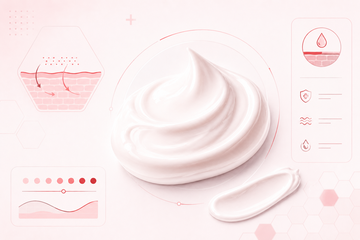
Clindamycin topical cream is commonly described as a semisolid cutaneous formulation in which the lincosamide antibiotic clindamycin is incorporated into a cream vehicle. The cream format creates a distinct physicochemical environment compared with clindamycin gel or solution formulations, with vehicle composition influencing spreading, surface residence, drug partitioning, and interaction with the skin barrier.

Skin barrier context encompasses the stratum corneum, epidermal lipids, corneocyte organization, surface hydration, and underlying viable epidermis. These structures influence how a topical formulation interacts with the cutaneous interface and are relevant to acne and inflammatory acne, where follicular keratinization, sebum, microbial ecology, and inflammatory signaling create a complex dermatologic environment.

Absorption variability reflects differences in skin physiology and formulation characteristics. Cream composition, lipid content, viscosity, emulsion structure, hydration, and formulation-dependent occlusivity can influence drug partitioning and local retention. These properties make clindamycin topical cream a useful pharmacology concept for examining epidermal barrier behavior, follicular penetration, cutaneous absorption, and the relationship between pharmaceutical vehicle design and local drug distribution.

Clindamycin Topical Cream Overview

Clindamycin cream form

Clindamycin topical cream represents a semisolid pharmaceutical dosage form in which clindamycin is incorporated into an emulsion-based or cream-like vehicle. Clindamycin is a lincosamide antibiotic, while the cream vehicle determines many physical characteristics associated with cutaneous delivery. Dermatologic pharmacology commonly separates the antimicrobial properties of the active pharmaceutical ingredient from formulation properties such as emulsion structure, lipid phase, aqueous phase, viscosity, rheology, surfactant composition, and drug partitioning.

The cream interacts with multiple cutaneous compartments, including the stratum corneum, viable epidermis, pilosebaceous apparatus, follicular canal, and superficial dermal environment. These compartments differ in lipid composition, hydration, permeability, and structural organization. Such characteristics are relevant to acne, where follicular keratinization, sebum accumulation, microbial ecology, and inflammatory signaling contribute to lesion development. Inflammatory presentations including inflamed acne therefore provide a useful anatomical context for examining localized topical drug distribution.

Formulation variability is central to the cream concept because lipid content, emulsion architecture, viscosity, water activity, spreading characteristics, and surface residence can influence cutaneous drug behavior. Comparison with gel and solution dosage forms illustrates how vehicle architecture changes the physicochemical environment surrounding clindamycin. The resulting topical pharmacology involves interactions among drug properties, cream composition, skin barrier organization, follicular anatomy, and local physiological conditions.

Concept Dermatologic context Relevant formulation variable
Active ingredient Clindamycin as a lincosamide antibiotic Drug physicochemical properties
Cream vehicle Semisolid emulsion-based cutaneous formulation Lipid and aqueous phase characteristics
Skin interface Stratum corneum and epidermal contact Hydration and surface wetting
Follicular environment Pilosebaceous structures and keratinous material Follicular architecture and sebum
Formulation variability Differences among topical dosage forms Emulsion, viscosity, and excipient properties

Skin Barrier Context

The skin barrier is commonly described as a multilayered biological interface in which the stratum corneum provides a major resistance to molecular movement. Corneocytes are embedded within an intercellular lipid matrix containing ceramides, cholesterol, and free fatty acids, creating a structured environment that influences diffusion and partitioning. A clindamycin cream therefore interacts first with a heterogeneous barrier rather than entering a uniform aqueous compartment.

Barrier characteristics vary with hydration, lipid composition, epidermal organization, anatomical location, and local physiological conditions. Cream formulations can alter the surface microenvironment through their emulsion structure and lipid-associated components. Formulation-dependent occlusivity may influence water loss from the stratum corneum and consequently alter hydration-related physicochemical conditions. These factors are relevant to inflammatory acne, including lesions such as papules, pustules, and nodules, where local inflammation can coexist with altered follicular biology.

Skin barrier context also provides a framework for distinguishing intercellular epidermal transport from follicular pathways. The pilosebaceous unit creates a specialized anatomical route that differs from diffusion through the intercellular lipid matrix. Barrier function, follicular penetration, keratinization, sebum composition, and formulation properties can therefore interact to produce variable cutaneous exposure. Often discussed in dermatology references, these concepts illustrate why topical absorption is influenced by both biological barrier characteristics and pharmaceutical formulation design.

Barrier factor Cutaneous structure Pharmacologic relevance
Stratum corneum Corneocytes and intercellular lipids Major diffusion barrier
Epidermal hydration Water content of superficial skin Influences barrier physicochemistry
Lipid organization Ceramides, cholesterol, fatty acids Affects molecular partitioning
Occlusivity Formulation-mediated surface covering Can alter hydration and residence
Follicular pathway Pilosebaceous canal Distinct route for topical distribution

Absorption & Occlusivity Concepts

Skin absorption describes movement of clindamycin from the cream vehicle into cutaneous compartments through processes involving deposition, partitioning, diffusion, and local retention. The stratum corneum represents a complex barrier in which drug molecules encounter corneocyte surfaces and intercellular lipids. Cream composition can influence the thermodynamic activity of clindamycin at the skin interface, while emulsion structure and excipient characteristics can affect how the active ingredient becomes available for partitioning.

Absorption variability can arise from both biological and pharmaceutical sources. Skin hydration, barrier organization, sebum, epidermal thickness, follicular density, and anatomical location contribute biological heterogeneity. Cream viscosity, lipid content, aqueous phase, surfactants, solvents, and emulsion stability contribute formulation variability. Occlusivity is particularly relevant because a formulation that forms a persistent surface layer can influence water retention and stratum corneum hydration, potentially changing the physicochemical environment through which topical molecules diffuse.

Distribution can occur through interfollicular and follicular pathways. Follicular penetration involves entry into the pilosebaceous unit, where keratin, sebum, epithelial surfaces, and microbial communities create a specialized microenvironment. Clinicians may evaluate these variables when interpreting topical pharmacology, while comparison with gel formulations and solution formulations illustrates how vehicle architecture contributes to differences in surface residence and local distribution.

Absorption concept Primary compartment Relevant determinant
Surface deposition Stratum corneum interface Cream spreading and residence
Partitioning Corneocyte and lipid domains Drug-lipid affinity
Diffusion Epidermal compartments Barrier organization and concentration gradient
Occlusivity Skin surface and stratum corneum Vehicle lipid and film characteristics
Follicular distribution Pilosebaceous unit Follicular architecture and sebum

Follicular & Keratinization Factors

Follicular penetration is commonly discussed in topical pharmacology because pilosebaceous units form anatomical invaginations extending from the skin surface into deeper follicular structures. The follicular canal contains keratinized material and connects with sebaceous structures, producing a microenvironment with physicochemical properties distinct from the surrounding epidermis. Clindamycin topical cream can therefore be considered in relation to follicular entry, drug partitioning, sebum interaction, local retention, and the characteristics of the cream vehicle.

Keratinization describes epidermal differentiation and the progressive formation of keratin-rich cellular structures. In acne biology, altered follicular keratinization can contribute to accumulation of corneocytes and changes in follicular patency. This process is relevant to blackheads and whiteheads, while inflammatory acne can involve subsequent interactions among follicular contents, microbial ecology, innate immune signaling, and tissue inflammation. Topical drug distribution occurs within this dynamic anatomical environment rather than across a static barrier.

Cream formulation properties can intersect with follicular biology through surface wetting, emulsion behavior, lipid interactions, and residence at follicular openings. Occlusive characteristics may alter local hydration, while viscosity and phase structure can influence the physical relationship between formulation and follicular material. Often discussed in dermatology references, these relationships demonstrate that follicular penetration depends on interacting variables involving formulation architecture, skin barrier organization, keratinization, sebum, hydration, and pilosebaceous anatomy.

Factor Follicular context Potential relevance
Follicular canal Invaginated pilosebaceous structure Distinct anatomical pathway
Keratinization Corneocyte differentiation and accumulation Influences follicular microenvironment
Sebum Lipid-rich sebaceous secretion May influence drug partitioning
Comedonal morphology Open and closed follicular obstruction Changes local physical environment
Cream occlusivity Surface film and hydration effects May modify follicular and epidermal conditions

Neutral Topical Interaction Concepts

Neutral topical interaction concepts describe how clindamycin cream can coexist with other dermatologic formulations and active ingredients at the skin interface. Relevant formulation variables include pH, emulsion stability, solvent compatibility, lipid phase composition, surfactant behavior, polymer interactions, surface hydration, and changes in vehicle rheology. These are pharmaceutical formulation concepts that help explain how multiple substances may occupy the same cutaneous environment without assuming identical physicochemical behavior across different combinations.

Acne pharmacology provides several contexts for discussing topical interactions. Combinations involving benzoyl peroxide, salicylic acid, or tretinoin involve different molecular properties, vehicles, mechanisms, and physicochemical environments. The corresponding pages on clindamycin and benzoyl peroxide, clindamycin and salicylic acid, and clindamycin and tretinoin represent distinct pharmacodynamic and formulation contexts. Cream characteristics can influence surface residence, lipid interaction, spreading, and local partitioning.

Route comparison provides another formulation perspective. Clindamycin cream operates primarily at the cutaneous interface, whereas oral clindamycin capsules involve gastrointestinal absorption followed by systemic distribution. This distinction emphasizes the importance of dosage-form architecture, anatomical compartment, absorption pathway, and pharmacokinetic behavior. Cream pharmacology can therefore be understood as part of a broader drug-delivery system involving active-ingredient properties, vehicle composition, skin barrier function, and the physicochemical environment of coexisting topical substances.

Topical concept Formulation variable Dermatologic context
Emulsion compatibility Lipid and aqueous phase characteristics Cream structure and drug distribution
pH interaction Acid-base environment Drug ionization and formulation behavior
Lipid interaction Cream lipids and sebum Follicular partitioning
Combination context Multiple active ingredients Acne pharmacology
Route distinction Topical versus oral dosage form Local versus systemic pharmacokinetics

Clinical Interpretation Factors

Clinical interpretation of clindamycin topical cream commonly integrates formulation properties with skin barrier physiology, lesion morphology, follicular anatomy, and pharmacokinetic concepts. Anatomical sites can differ in epidermal thickness, follicular density, sebum production, hydration, and lipid composition. These variables create heterogeneous environments in which cream spreading, occlusivity, evaporation, partitioning, and follicular contact may vary. In inflammatory acne, lesions such as papules, pustules, nodules, and cystic acne provide morphological context for interpreting local skin biology.

Visible findings and symptom perception can also vary independently of pharmacokinetic exposure. Erythema, swelling, tenderness, texture, lesion persistence, and residual discoloration represent different dimensions of dermatologic disease. Changes in acne redness can occur on a different biological timescale from structural findings such as acne scars. Dermatologic interpretation therefore distinguishes subjective perception, visible morphology, inflammatory activity, tissue remodeling, and local drug distribution rather than treating these measurements as interchangeable.

Formulation variability remains a central interpretation factor. Cream lipid content, emulsion structure, viscosity, surface film formation, occlusivity, and active-ingredient partitioning can influence cutaneous exposure characteristics. Comparison with gel or solution formulations can clarify how different vehicles create different delivery environments. Clinicians may evaluate these variables within the broader framework of topical pharmacology, where clindamycin properties, formulation architecture, anatomical compartment, and skin barrier physiology collectively shape interpretation.

Interpretation factor Dermatologic variable Pharmacology relevance
Lesion morphology Papules, pustules, nodules, cystic lesions Defines inflammatory skin context
Barrier physiology Hydration, lipids, corneocyte organization Influences cutaneous distribution
Formulation variability Emulsion structure, viscosity, occlusivity Modifies surface drug behavior
Symptom perception Redness, tenderness, swelling, texture May vary independently of exposure
Residual findings Discoloration and scarring Represent processes distinct from active inflammation

Frequently Asked Questions

Clindamycin topical cream concepts describe the relationship among clindamycin, a cream vehicle, and the anatomical structures of the skin. The terminology commonly encompasses cutaneous deposition, skin absorption, formulation variability, skin barrier function, follicular penetration, occlusivity, and local distribution. Dermatologic pharmacology uses these concepts to distinguish the active pharmaceutical ingredient from physical and biological factors influencing its behavior after topical application.

Skin barrier context describes how a topical cream interacts with the stratum corneum and underlying epidermal structures. It encompasses corneocyte organization, intercellular lipids, hydration, surface conditions, and barrier permeability. Cream formulations can also influence the local microenvironment through emulsion structure and occlusivity. These factors are commonly considered when describing cutaneous drug partitioning, diffusion, retention, and formulation-dependent absorption.

Absorption variability reflects differences in both formulation characteristics and skin physiology. Cream lipid content, emulsion structure, viscosity, excipients, drug partitioning, and occlusivity can influence cutaneous availability. Skin hydration, barrier organization, epidermal thickness, follicular density, sebum, and anatomical location can also differ. Consequently, topical absorption is commonly described as a dynamic pharmacokinetic process involving interacting pharmaceutical and biological variables.

Follicular penetration refers to movement of a topical compound into the pilosebaceous unit rather than exclusively through intercellular pathways of the stratum corneum. The follicular canal contains keratinous material and is associated with sebaceous structures, creating a specialized microenvironment. Dermatologic pharmacology often discusses follicular penetration in relation to vehicle characteristics, drug partitioning, follicular architecture, sebum, and local keratinization.

Keratinization describes epidermal differentiation and the formation of keratin-rich cellular structures. In acne biology, altered follicular keratinization can contribute to accumulation of corneocytes and changes within the pilosebaceous canal. These structural features influence the physical environment encountered by topical formulations. Clindamycin cream pharmacology can therefore be considered alongside follicular keratin, epidermal barrier organization, sebum, hydration, and lesion morphology.

Inflammatory acne patterns include lesions such as papules, pustules, nodules, and cystic lesions. These morphologies reflect interactions among follicular obstruction, keratinization, sebum, microbial ecology, and host inflammatory signaling. From a pharmacology perspective, lesion morphology provides anatomical and biological context for interpreting topical distribution. The local environment can differ between inflamed and noninflamed skin, contributing to variability in formulation behavior.

Symptom perception can vary because sensory and visible characteristics of skin lesions do not necessarily correspond directly with local drug exposure. Redness, tenderness, swelling, surface texture, and lesion persistence can change at different rates. Residual discoloration and scarring can also remain after inflammatory activity changes. Dermatologic interpretation therefore distinguishes subjective perception, visible morphology, inflammatory biology, tissue remodeling, and pharmacokinetic exposure.

Clindamycin topical cream is classified as a topical semisolid pharmaceutical formulation containing clindamycin, a lincosamide antibiotic, within a cream-based vehicle. Its dermatologic pharmacology encompasses cutaneous drug delivery, skin barrier interaction, surface residence, absorption, follicular penetration, local distribution, and formulation variability. This classification differs from systemic dosage forms because the cream centers pharmacologic analysis on the skin as the principal anatomical interface.