Acne Spectrum • Microbial Ecology

Acne: From Comedonal to Deep Inflammatory Disease

Acne is a broad dermatologic category involving the pilosebaceous unit and commonly described across a spectrum from comedonal lesions to inflammatory and deep inflammatory lesions. Blackheads and whiteheads reflect distinct patterns of follicular obstruction, while papules and pustules represent more evident inflammatory morphology. Deeper lesions can involve nodules and cystic acne within the same disease spectrum.

Acne pathophysiology involves interacting processes including altered follicular keratinization, follicular occlusion, sebaceous activity, microbial ecology, and innate immune signaling. Retention of keratinous material and sebum contributes to comedonal formation, while changes in the follicular microenvironment and host response can accompany progression toward inflammatory lesions. The inflammatory spectrum is explored further through inflamed acne, papules, and pustules.

Clindamycin provides a topical antibiotic context within acne pharmacology, particularly in relation to bacterial factors and Cutibacterium acnes. Its role is distinct from the structural processes responsible for keratin plugs and follicular obstruction. Formulation characteristics also influence how topical therapy is categorized, with topical gel representing one formulation context within the broader dermatologic architecture.

Acne Spectrum Overview
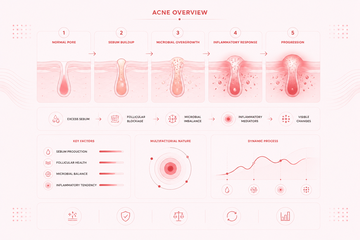
Acne overview conceptual image

Acne is commonly described as a chronic inflammatory disorder of the pilosebaceous unit with heterogeneous lesion morphology. The acne spectrum ranges from comedonal lesions, including open and closed comedones, to inflammatory lesions such as papules and pustules, and deeper inflammatory lesions such as nodules and cystic acne. These categories describe clinical morphology while reflecting overlapping biological processes involving follicular keratinization, sebaceous activity, microbial ecology, and host immune signaling. A single individual may exhibit multiple lesion types simultaneously.

Comedonal formation is associated with altered follicular desquamation and retention of keratinous material within the follicular canal. Sebum contributes to the follicular environment and can combine with retained corneocytes to produce obstruction. When inflammatory signaling becomes more prominent, papular and pustular lesions may develop, while deeper inflammation can involve nodular or cystic structures. The inflammatory spectrum is discussed further through inflamed acne, while specific lesion morphologies are described at papules and pustules.

Acne Category Characteristic Lesions Dominant Dermatologic Features
Comedonal acne Blackheads and whiteheads Follicular keratinization and obstruction
Inflammatory acne Papules and pustules Inflammatory signaling and follicular inflammation
Deep inflammatory acne Nodules and cystic lesions Deeper inflammatory involvement of the pilosebaceous unit
Mixed acne Combinations of lesion types Overlapping comedonal and inflammatory processes

Comedonal Acne

Comedonal acne is commonly described through the presence of open and closed comedones. Blackheads are open comedones in which retained follicular material reaches the surface through a dilated opening, whereas whiteheads are closed comedones with a relatively covered follicular orifice. Both arise within the pilosebaceous unit and are associated with altered keratinization, corneocyte retention, sebaceous activity, and follicular obstruction. The visual distinction primarily reflects differences in follicular opening and surface exposure.

Keratin plugs form when cohesive corneocytes accumulate within the follicular canal and intermingle with sebum. This process can produce progressive follicular occlusion without requiring prominent inflammation. Comedonal lesions may exist independently or alongside papules and pustules as part of a mixed acne phenotype. The relationship between comedones and topical pharmacologic categories is multifactorial, with benzoyl peroxide, salicylic acid, and tretinoin contexts represented separately through acne-BPO combination, acne-salicylic combination, and acne-tretinoin combination.

Lesion Follicular Opening Primary Morphologic Context
Whitehead Relatively closed Retained keratin and sebum beneath the surface
Blackhead Open Exposed follicular contents with surface oxidation
Keratin plug Variable Accumulated corneocytes within the follicular canal
Comedonal acne Open or closed Noninflammatory follicular obstruction

Inflammatory Acne

Inflammatory acne is commonly described when erythematous, edematous, or otherwise inflamed lesions accompany or arise from the comedonal process. Papules represent elevated inflammatory lesions without a prominent purulent center, while pustules contain visible purulent material associated with an inflammatory follicular response. The transition from comedonal to inflammatory morphology involves interactions among follicular occlusion, sebaceous activity, microbial ecology, epithelial signaling, and innate immune response. These processes are not necessarily linear in every individual.

The inflammatory environment surrounding acne lesions can involve recognition of microbial-associated molecular patterns, cytokine signaling, neutrophilic activity, and disruption of the follicular epithelial barrier. Cutibacterium acnes is frequently discussed within this microbial context, although its presence is part of normal skin ecology and does not independently define inflammatory acne. Clinicians may evaluate the distribution and morphology of inflammatory lesions in relation to comedonal burden. Detailed lesion categories are presented through papules, pustules, and inflamed acne.

Lesion Type Typical Morphology Inflammatory Context
Papule Elevated inflamed lesion Localized inflammatory response without dominant visible pus
Pustule Inflamed lesion with purulent center Inflammatory cellular and vascular response
Comedone with inflammation Obstructed follicular lesion with inflammatory features Overlap between comedonal and inflammatory processes
Inflammatory acne Papular or pustular lesion pattern More evident innate immune and inflammatory activity

Deep Inflammatory Acne

Deep inflammatory acne is commonly described when inflammatory involvement extends beyond superficial comedonal or papular morphology into deeper portions of the pilosebaceous unit and surrounding dermal tissue. Nodules are deep, firm inflammatory lesions associated with substantial tissue involvement, while cystic acne describes deeper lesions characterized by a more fluctuant or cyst-like morphology in some clinical descriptions. These categories represent deeper inflammatory phenotypes rather than simply larger versions of superficial comedones.

The development of deep inflammatory lesions can involve follicular rupture, extensive inflammatory signaling, dermal immune-cell recruitment, extracellular matrix disruption, and interactions among sebum, keratinous material, and microbial ecology. Follicular occlusion can create conditions in which retained material and inflammatory mediators interact with surrounding tissue. Dermatology references often distinguish deep inflammatory lesions from superficial papules and pustules because anatomical depth and tissue response differ. Detailed morphology is explored through nodules and cystic acne.

Deep inflammatory acne also has relevance to the broader trajectory of post-inflammatory alteration. Persistent or intense dermal inflammation can affect collagen organization, pigmentation, and local tissue architecture, creating a relationship between active acne morphology and later residual changes. These outcomes are conceptually distinct from the microbial component itself. The terminology of deep inflammatory acne therefore integrates lesion depth, inflammatory intensity, follicular anatomy, and tissue response rather than relying solely on surface appearance.

Deep Lesion Anatomical Context Characteristic Features
Nodule Deep dermal or pilosebaceous involvement Firm inflammatory lesion with substantial tissue involvement
Cystic lesion Deeper inflammatory tissue Cyst-like or fluctuant morphology in clinical descriptions
Follicular rupture Follicular wall and surrounding dermis Releases retained material into surrounding tissue
Post-inflammatory alteration Dermis and epidermis May follow substantial inflammatory tissue activity

Microbial Component

Microbial ecology is an important component of acne pathophysiology, particularly within sebaceous pilosebaceous units. Cutibacterium acnes is a common resident of human skin and is enriched in sebaceous follicles, where its metabolic activity interacts with the lipid-rich follicular environment. Acne is not attributable to bacterial presence alone, because Cutibacterium acnes forms part of normal skin microbiota. Rather, microbial factors interact with follicular keratinization, sebum composition, epithelial signaling, and innate immune response.

Changes in follicular conditions can influence microbial ecology and bacterial metabolic activity. Sebaceous lipids provide substrates for microbial metabolism, while follicular occlusion can modify local biochemical conditions. Microbial-associated molecular patterns may interact with innate immune receptors and contribute to cytokine signaling, which can intensify inflammatory lesion development in susceptible follicular environments. This relationship helps explain why the microbial component is more directly relevant to inflammatory acne than to the purely structural appearance of a closed comedone.

Clindamycin is a lincosamide-class topical antibiotic and therefore occupies a pharmacologic context associated with bacterial involvement in acne. Its relevance to acne architecture concerns microbial factors rather than the mechanical removal of keratin plugs. Formulation categories can be considered separately, including gel, cream, and solution. The distinction between antibacterial pharmacology and follicular keratinization remains important when interpreting acne as a multifactorial dermatologic disorder.

Microbial Factor Description Acne Relevance
Cutibacterium acnes Common organism of sebaceous follicles Participates in the follicular microbial environment
Sebaceous lipids Lipid-rich substrate within pilosebaceous units Influences microbial metabolic conditions
Microbial signaling Interactions between microbial products and host receptors Can contribute to inflammatory signaling
Innate immune response Host recognition and inflammatory pathways Connects microbial ecology with inflammatory lesion development

Interpretation Factors

Interpretation of acne involves assessment of lesion morphology, anatomical depth, distribution, inflammatory characteristics, comedonal burden, and the relationship between different lesion types. Clinicians may evaluate whether the dominant pattern is comedonal, inflammatory, deep inflammatory, or mixed. Blackheads and whiteheads indicate different forms of comedonal obstruction, whereas papules and pustules represent inflammatory morphology. Nodules and cystic lesions are generally considered deeper inflammatory phenotypes. These distinctions provide a structured vocabulary for describing the acne spectrum.

Sebaceous activity, follicular keratinization, follicular occlusion, microbial ecology, and innate immune response provide biological context for the observed morphology. The same anatomical region can contain lesions at different stages or with different mechanisms operating simultaneously. Distribution across sebaceous areas can reflect regional pilosebaceous anatomy, while environmental and mechanical factors may modify lesion expression. Clinicians may evaluate these variables collectively rather than assigning a single cause to every lesion.

Pharmacologic interpretation also benefits from separating lesion phenotype from mechanism of action. Topical clindamycin is associated with antibacterial activity, whereas other acne therapies may have keratinization, comedolytic, or anti-inflammatory contexts. Formulations such as gel, cream, and solution describe dosage-form characteristics rather than acne severity. Systemic formulation terminology, including capsules, likewise represents a pharmaceutical category rather than a specific lesion morphology.

Interpretation Factor What It Represents Relevance to Acne Classification
Lesion morphology Comedonal, papular, pustular, nodular, or cystic appearance Defines the clinical phenotype
Anatomical depth Superficial versus deeper tissue involvement Distinguishes inflammatory from deep inflammatory lesions
Sebaceous activity Lipid-rich follicular environment Contributes to pilosebaceous physiology
Follicular occlusion Retention and obstruction within the follicular canal Provides structural context for comedone formation
Microbial ecology Interactions involving Cutibacterium acnes and host tissue Provides context for bacterial and immune components

Frequently Asked Questions

Acne is commonly described as a disorder of the pilosebaceous unit involving a spectrum of comedonal, inflammatory, and deep inflammatory lesions. Its pathophysiology includes altered follicular keratinization, follicular occlusion, sebaceous activity, microbial ecology, and innate immune signaling. Blackheads, whiteheads, papules, pustules, nodules, and cystic lesions represent different morphological expressions within this broader dermatologic spectrum.

Comedonal acne is characterized primarily by open and closed comedones. Open comedones are commonly called blackheads, while closed comedones are commonly called whiteheads. Both involve retention of keratinous and sebaceous material within the pilosebaceous unit, with differences in the follicular opening and surface exposure. Altered keratinization and follicular obstruction are central structural features of comedonal acne.

Inflammatory acne refers to acne morphology in which inflammatory lesions such as papules and pustules are prominent. It involves interactions among follicular occlusion, sebaceous activity, microbial ecology, epithelial signaling, and innate immune response. Inflammatory lesions can coexist with comedones, creating a mixed phenotype. Their visible erythema, elevation, and cellular inflammatory characteristics distinguish them from noninflamed comedonal lesions.

Deep inflammatory acne is commonly described when inflammatory involvement extends into deeper portions of the pilosebaceous unit and surrounding dermal tissue. Nodules are deep, firm inflammatory lesions, while cystic acne describes deeper cyst-like inflammatory morphology in some clinical terminology. These lesions involve more substantial tissue inflammation than superficial comedones, papules, or pustules and can reflect follicular rupture and dermal immune activity.

Sebaceous activity contributes to the lipid-rich environment of the pilosebaceous unit and influences the material present within follicular canals. Sebum can combine with retained corneocytes when follicular keratinization is altered, contributing to pore obstruction and comedonal formation. Sebaceous lipids also influence microbial ecology, including the environment inhabited by Cutibacterium acnes, linking sebaceous physiology with other acne-related processes.

Follicular occlusion describes retention and obstruction within the pilosebaceous unit and is closely associated with acne formation. Altered keratinization can increase accumulation of corneocytes, while sebaceous material contributes to the contents of the follicular canal. Progressive obstruction can produce comedonal lesions and modify the local follicular environment, creating conditions in which inflammatory and microbial processes may become more prominent.

The bacterial component of acne is commonly discussed in relation to Cutibacterium acnes and the broader microbial ecology of sebaceous follicles. Cutibacterium acnes is a normal skin organism, so its presence alone does not define acne. Its metabolic activity and microbial-associated signals can interact with follicular conditions and innate immune pathways, contributing to the complex inflammatory environment associated with some acne lesions.

Clindamycin is a lincosamide antibiotic used in topical acne treatment contexts and is primarily associated with the bacterial component of acne pharmacology. Its relevance differs from mechanisms involving follicular keratinization, comedonal obstruction, and sebaceous activity. Within acne pathophysiology, topical clindamycin is therefore considered in relation to microbial factors, particularly the broader ecological and inflammatory context involving Cutibacterium acnes.