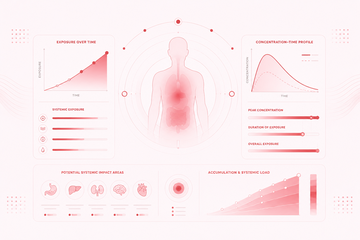
Clindamycin overdose concepts describe excessive systemic exposure in relation to the medication's pharmacokinetic and pharmacodynamic characteristics. The concept is distinct from ordinary adverse effects and is commonly discussed through concentration-time profiles, absorption, distribution, metabolism, elimination, and the relationship between exposure and toxicity. General safety context includes recognition that gastrointestinal manifestations and other adverse reactions can occur across different exposure circumstances.
From an infectious-disease pharmacology perspective, Clindamycin toxicity is interpreted alongside formulation, route, systemic bioavailability, protein binding, tissue distribution, and clearance. The distinction between systemic formulations and topical products is relevant when considering exposure, while capsules represent one pharmaceutical form within the broader Clindamycin pharmacology framework.
A toxicity overview also intersects with established side effects, allergy, and contraindications concepts. These categories describe related but different pharmacologic phenomena. Overdose concepts therefore provide an educational framework for understanding excessive exposure, concentration-time variability, gastrointestinal toxicity, hypersensitivity, and systemic pharmacokinetic context without defining an individualized clinical response.
Clindamycin overdose concepts describe exposure that exceeds the intended medication-use pattern and creates a pharmacologic context in which systemic concentrations may become higher or persist differently than anticipated. Clindamycin is a lincosamide antimicrobial that inhibits bacterial protein synthesis, and its systemic exposure is governed by absorption, distribution, metabolism, and elimination. An overdose concept therefore concerns the relationship between administered exposure and the resulting concentration-time profile rather than a single symptom or isolated laboratory finding. In pharmacology references, excessive exposure is commonly distinguished from expected adverse effects occurring during ordinary use.
The toxicity overview of Clindamycin is particularly associated with gastrointestinal manifestations, including gastrointestinal irritation and antibiotic-associated disturbances of intestinal flora. More substantial systemic exposure can also be discussed in relation to broader adverse reactions, although manifestations vary with individual pharmacokinetic characteristics and exposure circumstances. The underlying infectious-disease indication, such as soft-tissue infection or another bacterial disease, provides clinical context but does not itself define the toxicologic profile. General safety terminology also remains distinct from hypersensitivity and contraindication classifications.
Overdose concepts are therefore best understood as an intersection of exposure, pharmacokinetics, toxicity, and medication-use history. Clinicians may evaluate exposure chronology, formulation, route, concomitant substances, gastrointestinal manifestations, hypersensitivity history, and other contextual factors when interpreting an excessive-exposure scenario. These variables help explain why toxicity cannot be inferred from the amount of medication alone.
| Overview factor | Pharmacologic meaning | Toxicity context |
|---|---|---|
| Systemic exposure | Amount and persistence of Clindamycin within systemic circulation | Central component of overdose concepts |
| Concentration-time profile | Change in systemic concentration across time | Frames exposure variability |
| Gastrointestinal manifestations | Adverse effects involving the gastrointestinal system | Important toxicity category |
| Exposure circumstances | Route, formulation, timing, and medication-use pattern | Shapes interpretation of toxicity |
The pharmacological context of a Clindamycin overdose centers on pharmacokinetics and the resulting systemic exposure. Absorption determines entry into circulation, distribution influences movement between plasma and tissues, protein binding affects the free fraction of drug, and metabolism and elimination shape the decline in concentration. An altered exposure event can consequently produce a concentration-time profile that differs from the pattern associated with ordinary administration. Pharmacology references often describe these processes separately because each contributes to overall systemic exposure.
Clindamycin pharmacokinetics also varies according to formulation and route. Systemic formulations can generate measurable plasma exposure, whereas topical products such as gel and cream have different exposure characteristics. The distinction is important when interpreting toxicity concepts because pharmaceutical presentation influences absorption and systemic availability. Capsules represent an oral formulation whose pharmacokinetic behavior is part of the broader systemic Clindamycin profile.
Concentration-time variability can reflect differences in absorption rate, distribution, clearance, administration timing, or exposure magnitude. In an overdose context, pharmacokinetic interpretation is therefore more informative than treating toxicity as a simple function of quantity. Clinicians may evaluate the temporal relationship between exposure and manifestations, along with formulation and individual pharmacokinetic factors. This framework provides context for gastrointestinal toxicity, hypersensitivity, and other adverse reactions without equating every adverse event with overdose.
| Pharmacological factor | Primary process | Overdose relevance |
|---|---|---|
| Absorption | Entry of Clindamycin into systemic circulation | Influences initial systemic exposure |
| Distribution | Movement between plasma and tissues | Shapes concentration across compartments |
| Metabolism | Biotransformation of Clindamycin | Contributes to exposure duration |
| Elimination | Removal of drug and metabolites | Influences concentration decline |
| Protein binding | Association of drug with circulating proteins | Influences free drug fraction |
Clindamycin toxicity manifestations are commonly discussed through gastrointestinal, systemic, dermatologic, and hypersensitivity categories. Gastrointestinal manifestations are particularly relevant to Clindamycin pharmacology because alteration of intestinal flora can accompany antimicrobial exposure. Nausea, vomiting, abdominal discomfort, and diarrhea are among the gastrointestinal phenomena described in association with Clindamycin exposure, while antibiotic-associated colitis represents a distinct and clinically significant gastrointestinal complication. The presence of a manifestation does not by itself establish an overdose because similar adverse effects can occur during ordinary exposure.
Hypersensitivity represents another pharmacologic category and can include cutaneous manifestations ranging from rash to more serious systemic reactions. These phenomena are mechanistically different from concentration-mediated toxicity and are therefore interpreted separately from systemic exposure. The allergy framework provides additional context for hypersensitivity classification, while side effects encompasses the broader spectrum of adverse reactions associated with Clindamycin.
Toxicity interpretation also depends on temporal association, exposure history, pharmacokinetics, concurrent medications, underlying conditions, and the characteristics of the infectious disease. Conditions such as abscess or cellulitis provide the therapeutic context in which Clindamycin may be encountered, but the underlying infection does not determine whether a particular manifestation represents toxicity. Pharmacology references therefore distinguish expected adverse effects, hypersensitivity, and excessive systemic exposure as related but separate concepts.
| Toxicity manifestation | Pharmacologic category | Interpretive context |
|---|---|---|
| Nausea | Gastrointestinal adverse effect | May occur during Clindamycin exposure |
| Vomiting | Gastrointestinal manifestation | Relevant to exposure and tolerability context |
| Diarrhea | Gastrointestinal manifestation | Important within antibiotic-associated toxicity discussions |
| Rash | Dermatologic or hypersensitivity manifestation | Distinct from concentration-mediated toxicity |
| Hypersensitivity | Immune-mediated adverse reaction | Separate pharmacologic category |
Interpretation of Clindamycin overdose concepts involves multiple pharmacologic and contextual variables. Exposure chronology establishes the temporal relationship between medication administration and observed concentration-time changes. Formulation and route influence absorption and systemic bioavailability, while metabolism, elimination, and tissue distribution shape subsequent exposure. Individual pharmacokinetic variability can further modify the concentration-time profile. These factors mean that toxicity cannot be characterized solely by the existence of an excessive exposure event.
The infectious-disease context provides additional information without directly defining toxicologic severity. Microbial burden, pathogen susceptibility, anatomical infection site, and inflammatory response describe the underlying disease, while systemic exposure describes the medication-related pharmacologic dimension. For example, Clindamycin may be discussed in relation to skin infection, infected wounds, or deeper infectious processes. The indication and the toxicity profile remain conceptually separate, even when they occur simultaneously.
Clinicians may evaluate gastrointestinal manifestations, hypersensitivity features, concurrent medication exposure, formulation, administration pattern, and relevant pharmacokinetic characteristics when interpreting an overdose scenario. Established contraindications and adverse-effect classifications provide additional safety context but are not interchangeable with overdose terminology. A comprehensive interpretation therefore integrates medication history, concentration-time behavior, pharmacokinetics, manifestations, and infectious-disease classification.
| Interpretation factor | Information represented | Overdose significance |
|---|---|---|
| Exposure chronology | Timing and sequence of medication exposure | Frames concentration-time interpretation |
| Formulation | Pharmaceutical presentation | Influences systemic availability |
| Pharmacokinetics | Absorption, distribution, metabolism, and elimination | Determines exposure behavior |
| Concurrent substances | Other medications or exposures | May affect interpretation of manifestations |
| Underlying infection | Disease site, pathogen, and microbial burden | Provides infectious-disease context |
Clindamycin overdose, side effects, allergy, and contraindications describe overlapping safety domains but represent different pharmacologic concepts. Overdose refers to excessive exposure relative to an established medication-use pattern, whereas side effects describe adverse phenomena associated with medication exposure more broadly. A gastrointestinal manifestation, for example, may occur without an overdose. Hypersensitivity represents an immune-mediated category that can also occur independently of excessive systemic concentration. These distinctions are commonly described in pharmacology references.
Contraindications represent circumstances in which a medication's use is considered unsuitable because of a particular clinical or pharmacologic condition. They do not mean that a contraindication itself constitutes toxicity or overdose. The contraindications framework can therefore be considered separately from the side effects framework and the allergy framework. This separation is useful when organizing Clindamycin safety terminology.
The distinction becomes especially relevant when manifestations overlap. Diarrhea, abdominal symptoms, rash, or other adverse events can have multiple possible classifications depending on their timing, mechanism, exposure context, and clinical characteristics. Clinicians may evaluate the concentration-time profile, medication history, pharmacokinetic variables, and manifestation pattern when interpreting these categories. General safety context therefore depends on understanding the differences among excessive exposure, expected adverse effects, hypersensitivity, and contraindication status.
| Category | Definition | Relationship to overdose |
|---|---|---|
| Overdose | Excessive systemic medication exposure | Primary toxicity concept |
| Side effects | Adverse phenomena associated with medication exposure | Can occur without overdose |
| Hypersensitivity | Immune-mediated adverse reaction | Mechanistically distinct from excessive concentration |
| Contraindication | Condition affecting appropriateness of medication use | Separate from exposure magnitude |
Clindamycin overdose concepts describe excessive systemic exposure in relation to an established medication-use pattern. The pharmacologic framework includes absorption, distribution, metabolism, elimination, and the resulting concentration-time profile. Toxicity may involve gastrointestinal manifestations or other adverse phenomena, but individual symptoms do not independently establish overdose. The concept is therefore based on exposure and pharmacokinetic context rather than symptoms alone.
A Clindamycin toxicity overview describes the range of pharmacologic and adverse-effect phenomena associated with systemic exposure. Gastrointestinal manifestations are particularly relevant, while hypersensitivity and other systemic reactions represent separate categories. The overview also incorporates pharmacokinetics, formulation, route, concentration-time variability, and exposure history. These factors provide general safety context without equating every adverse effect with excessive exposure.
Concentration-time variability describes changes in systemic Clindamycin concentration across time and is central to pharmacokinetic interpretation. Altered exposure can modify the shape, magnitude, or persistence of the concentration-time profile. Absorption, distribution, metabolism, elimination, formulation, and individual pharmacokinetic characteristics all contribute. Consequently, overdose concepts involve the relationship between exposure and time rather than a single concentration or isolated manifestation.
The pharmacokinetic context includes Clindamycin absorption, distribution, protein binding, metabolism, and elimination, all of which determine systemic exposure and concentration-time behavior. Formulation and route also influence bioavailability and tissue distribution. In an overdose concept, these variables help explain how exposure may differ from an expected pattern. Pharmacokinetic variability is therefore an important component of general toxicity interpretation.
General Clindamycin safety considerations encompass adverse effects, gastrointestinal manifestations, hypersensitivity, contraindication status, formulation characteristics, pharmacokinetic exposure, and medication-use context. Gastrointestinal toxicity has particular relevance because Clindamycin can alter intestinal microbial flora. Safety terminology also distinguishes ordinary adverse effects from excessive systemic exposure and from immune-mediated hypersensitivity. These categories provide a structured framework for understanding general toxicity without defining individualized clinical management.