Medication Timing • Adherence Overview

Clindamycin Missed Dose Concepts and Medication Timing

Clindamycin missed dose concepts describe interruptions or deviations within an established medication-timing pattern and how those deviations can be understood pharmacologically. In infectious-disease pharmacology, timing is connected with absorption, systemic exposure, distribution, elimination, and the resulting concentration-time curve. These concepts can be relevant when Clindamycin is used for conditions such as soft-tissue infection, where antimicrobial exposure occurs alongside microbial burden and an inflammatory response.

Medication timing provides a framework for understanding the temporal relationship between administrations and pharmacokinetic exposure. A missed or delayed administration can alter the conceptual shape of the concentration-time profile, producing variability in exposure rather than representing a single isolated pharmacologic event. The infectious-disease context can differ across skin infection, cellulitis, and other bacterial conditions.

Adherence represents the broader pattern of medication-taking behavior over time. In pharmacology references, missed dose concepts may therefore be discussed alongside administration regularity, formulation characteristics, absorption, elimination, susceptibility, and microbial burden. Related contexts such as abscess and infected wounds illustrate why medication timing is interpreted within the underlying infectious-disease classification rather than as an isolated numerical dosing issue.

Clindamycin Missed Dose Concepts
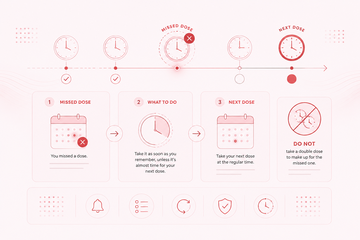
Missed dose concept

Clindamycin missed dose concepts refer to a departure from an established administration sequence and the resulting pharmacologic relationship between time and antimicrobial exposure. Clindamycin pharmacokinetics includes absorption, systemic distribution, protein binding, metabolism, and elimination, with each process contributing to the concentration-time curve. When an administration is absent or occurs at an irregular time, the subsequent concentration profile may differ from the pattern associated with consistent medication timing. This is commonly described as exposure variability rather than as a discrete pharmacologic diagnosis. The underlying infectious context, such as soft-tissue infection, can influence how such variability is interpreted.

A missed administration can be considered within the broader framework of antimicrobial pharmacodynamics, where organism susceptibility, tissue exposure, microbial burden, and concentration over time are distinct but interconnected concepts. Clindamycin inhibits bacterial protein synthesis, making the relationship between antimicrobial exposure and susceptible organisms an important component of pharmacologic interpretation. Adherence patterns can also include delayed administrations, repeated timing irregularity, or intermittent omissions. These patterns are conceptually different from pharmaceutical formulation characteristics described for capsules or solution. Infectious-disease references may evaluate timing variability alongside the disease compartment, inflammatory response, and overall antimicrobial exposure.

Missed dose concept Pharmacologic meaning Relevant context
Omitted administration Creates a departure from the expected exposure sequence Concentration-time variability
Delayed administration Changes the temporal spacing of exposure Medication timing
Repeated irregularity Produces a broader adherence pattern Cumulative exposure variability
Underlying infection Provides disease-specific pharmacologic context Microbial burden and inflammatory response

Medication Timing

Medication timing describes the temporal arrangement of Clindamycin administrations and its relationship to pharmacokinetic processes. Absorption begins after administration, followed by distribution and subsequent elimination, producing a dynamic concentration-time curve. The spacing between administrations influences how these phases overlap, while changes in timing can alter peak, trough, and overall exposure patterns. In infectious-disease pharmacology, medication timing is therefore commonly described through temporal exposure rather than through the administration event alone.

Timing concepts can be applied across different infectious-disease classifications, although the underlying pharmacology remains dependent on route, formulation, absorption, clearance, tissue distribution, and organism susceptibility. Clindamycin used in the context of cellulitis, folliculitis, or impetigo may be discussed within a different disease framework from deeper infection. The timing pattern itself does not establish microbial burden or inflammatory severity.

Clinicians may evaluate medication timing as one component of a broader pharmacologic picture that includes adherence, concentration-time variability, microbial susceptibility, tissue penetration, and inflammatory response. Timing irregularity can occur as isolated delay, omission, clustering, or repeated inconsistency, with each pattern producing a different conceptual relationship between administration and exposure. These distinctions help separate medication-taking behavior from the pharmacokinetic properties of Clindamycin and from the characteristics of the infectious process.

Timing pattern Pharmacokinetic relationship Conceptual interpretation
Regular timing Produces a recurring exposure pattern Stable temporal framework
Delayed timing Changes interval spacing Altered concentration-time relationship
Omitted timing Interrupts the expected sequence Exposure variability
Repeated irregularity Creates recurring temporal variation Adherence pattern

Adherence Overview

Adherence is a broad medication-use concept describing how consistently an established administration pattern is maintained over time. Within Clindamycin pharmacology, adherence can encompass regular timing, delayed administrations, omitted administrations, and other variations that influence the temporal pattern of systemic exposure. The pharmacokinetic consequences are represented conceptually by changes in the concentration-time curve, while the clinical context depends on the underlying infectious disease, pathogen susceptibility, microbial burden, and anatomical compartment.

Adherence should be distinguished from pharmacokinetic properties themselves. Clindamycin absorption, distribution, metabolism, protein binding, and elimination are intrinsic pharmacologic processes, whereas adherence describes the external timing pattern through which exposure is generated. A person may have consistent pharmacokinetic behavior but an irregular administration pattern, creating a different concentration-time profile. Infectious-disease references may discuss this distinction when considering MRSA, MSSA, and other pathogen-specific contexts.

The infectious-disease relevance of adherence also varies with disease classification. A medication timing pattern can be considered alongside inflammatory response, tissue involvement, microbial burden, susceptibility, and formulation. Conditions such as soft-tissue infection and infected wounds illustrate how the same pharmacologic timing concept may appear within different anatomical and microbiological settings. Adherence is therefore best understood as a longitudinal exposure-pattern concept rather than as a synonym for dose selection.

Adherence dimension Description Pharmacologic relevance
Consistency Regularity of administration over time Supports a recurring exposure pattern
Delay Administration occurs later than the established pattern Changes temporal exposure
Omission An expected administration is absent Creates a gap in exposure
Repeated variability Multiple timing deviations occur Produces cumulative concentration-time variation

Concentration-Time Interaction

The concentration-time curve is a central representation of pharmacokinetic exposure and describes how systemic Clindamycin concentration changes following administration. Absorption contributes to the ascending portion of the curve, distribution and metabolic processes influence subsequent phases, and elimination determines the decline in concentration. Medication timing affects how individual exposure profiles relate to one another. A missed or delayed administration may therefore create concentration-time variability, with the magnitude and duration of that variation depending on the underlying pharmacokinetic characteristics.

In infectious-disease pharmacology, concentration-time interaction is interpreted alongside antimicrobial susceptibility and microbial burden. The pharmacodynamic relationship between Clindamycin exposure and bacterial protein-synthesis inhibition depends on the organism and its susceptibility characteristics. Tissue distribution can further influence how systemic exposure relates to concentrations within infected compartments. These concepts may be relevant to soft-tissue dosage concepts, bone dosage concepts, and joint dosage concepts, although each anatomical setting has distinct pharmacologic considerations.

Repeated timing irregularity can generate a concentration-time pattern that differs from the profile associated with consistent administration. This does not mean that every deviation produces the same pharmacologic consequence. Route, formulation, absorption, clearance, distribution, and the temporal spacing of administrations all contribute. Infectious-disease references may therefore use concentration-time variability as a conceptual bridge between medication timing, adherence, pharmacokinetics, and antimicrobial exposure rather than as a standalone measure of treatment outcome.

Concentration-time feature Underlying process Timing relationship
Absorption phase Entry of Clindamycin into systemic circulation Begins after administration
Distribution phase Movement into tissues and body compartments Shapes exposure beyond initial absorption
Elimination phase Metabolic and excretory clearance Determines decline over time
Exposure variability Change in the temporal concentration pattern Can accompany irregular medication timing

Neutral Dosing Concepts

Neutral dosing concepts describe the pharmacologic variables used to characterize Clindamycin administration without assigning numerical instructions. Relevant dimensions include route, formulation, administration interval, absorption, systemic bioavailability, distribution, protein binding, metabolism, elimination, antimicrobial susceptibility, and exposure over time. In an infectious-disease setting, these variables are interpreted within the anatomical and microbiological characteristics of the infection. The distinction between systemic formulations and topical products such as gel or cream is particularly important because route and formulation influence the resulting pharmacokinetic profile.

Medication timing is one component of the dosing concept and describes the temporal spacing of administrations. A missed dose represents a change in that temporal sequence, while adherence represents the broader pattern of consistency. Neither term independently defines the appropriate pharmacologic regimen. Infectious-disease references may discuss Clindamycin exposure in relation to bacterial susceptibility, microbial burden, tissue penetration, and inflammatory response, with different considerations across dental dosage concepts, soft-tissue infection, bone infection, and joint infection.

The neutral terminology also separates dose intensity from frequency, route, formulation, and duration. Each represents a different pharmacologic dimension and can contribute to the overall concentration-time profile. Clinicians may evaluate these dimensions together with disease classification and pathogen information, while medication timing remains a conceptual variable describing exposure patterns. This framework allows missed dose concepts to be discussed without converting general pharmacology information into individualized clinical instructions.

Dosing concept What it represents Timing relevance
Route Pathway through which systemic exposure is generated Influences pharmacokinetic profile
Formulation Pharmaceutical presentation of Clindamycin Affects absorption and administration characteristics
Administration interval Temporal spacing between administrations Shapes concentration-time relationships
Duration Overall temporal span of exposure Describes longitudinal treatment context

Clinical Interpretation Factors

Clinical interpretation factors place Clindamycin missed dose concepts within the broader infectious-disease pharmacology framework. Relevant variables can include the identified or suspected pathogen, antimicrobial susceptibility, microbial burden, anatomical site, inflammatory response, route of administration, formulation, absorption, distribution, metabolism, elimination, and the existing medication-timing pattern. These factors are interconnected but not interchangeable. For example, a change in medication timing concerns exposure chronology, whereas microbial burden describes the infectious load and susceptibility describes the organism's response to Clindamycin.

The disease classification can also shape the pharmacologic context. Clindamycin exposure may be discussed in relation to folliculitis, impetigo, MRSA, or MSSA, while deeper infections involve additional tissue-distribution considerations. Inflammatory response can include erythema, edema, purulence, and leukocyte activity, but these findings do not directly quantify systemic antimicrobial exposure. Similarly, an adherence pattern does not establish pathogen susceptibility or disease severity.

Clinicians may evaluate medication timing alongside pharmacokinetic and microbiologic information when interpreting an infectious-disease case, but missed dose concepts remain distinct from individualized prescribing decisions. Formulation, route, concentration-time variability, microbial burden, and inflammatory response provide complementary dimensions of interpretation. References addressing side effects, allergy, and contraindications represent additional pharmacologic domains that are separate from adherence and medication timing.

Clinical interpretation factor Information represented Relationship to missed dose concepts
Pathogen identity Microorganism associated with infection Provides microbiological context
Microbial burden Relative infectious load Frames exposure within disease context
Inflammatory response Erythema, edema, purulence, and host activity Characterizes infectious environment
Pharmacokinetics Absorption, distribution, metabolism, and elimination Determines concentration-time behavior
Adherence pattern Consistency or variability in medication timing Shapes the temporal exposure profile

Frequently Asked Questions

Clindamycin missed dose concepts describe an interruption or deviation within an established medication-timing pattern. From a pharmacologic perspective, the concept concerns how altered administration timing can affect the concentration-time curve and overall exposure pattern. It is interpreted alongside absorption, distribution, elimination, antimicrobial susceptibility, microbial burden, and the infectious-disease context rather than as an isolated numerical dosing issue.

Medication timing describes the temporal relationship between Clindamycin administrations and pharmacokinetic exposure. Timing influences how absorption, distribution, and elimination phases overlap within the concentration-time curve. Regularity produces one exposure pattern, while delayed or omitted administrations may produce variability. The concept is distinct from formulation, route, susceptibility, microbial burden, and disease classification, which represent separate pharmacologic dimensions.

An adherence overview represents the broader pattern of consistency or variability in medication administration over time. For Clindamycin, adherence can include regular timing, delayed administrations, omissions, or repeated irregularity. These patterns may influence the temporal concentration profile, while intrinsic pharmacokinetic processes remain separate. Adherence is therefore a longitudinal medication-use concept rather than a synonym for dose selection or pharmacokinetic clearance.

Concentration-time variability refers to changes in the pattern of antimicrobial concentration across time. With Clindamycin, the concentration-time curve reflects absorption, distribution, metabolism, and elimination. Altered medication timing can modify the relationship among these phases and subsequent exposure patterns. The degree of variability depends on pharmacokinetic characteristics, formulation, route, administration sequence, and the temporal spacing of administrations.

Pharmacokinetic context explains how medication timing relates to systemic Clindamycin exposure. Absorption determines entry into circulation, distribution describes movement through tissues, and metabolism and elimination influence the decline in concentration. A missed or delayed administration changes the temporal sequence of exposure, but its conceptual significance depends on these underlying processes. Pharmacokinetics therefore provides the framework for interpreting medication timing and concentration-time variability.

Microbial burden describes the amount or persistence of infectious organisms within an affected compartment and provides important disease context for antimicrobial pharmacology. In Clindamycin therapy concepts, microbial burden is separate from medication timing but can influence how antimicrobial exposure is interpreted alongside susceptibility and tissue distribution. Missed dose concepts therefore belong within a broader framework that connects pharmacokinetics, microbiology, anatomy, and inflammatory response.

Timing irregularity can be described conceptually as delayed administration, omitted administration, clustered timing, or repeated inconsistency across an established medication schedule. Each pattern changes the temporal relationship among administrations and can contribute to concentration-time variability. The pharmacologic significance is not uniform because absorption, distribution, elimination, formulation, route, and the underlying infectious-disease context all influence the resulting exposure profile.

Infectious-disease classification provides the context in which Clindamycin medication timing is interpreted. Conditions involving skin, soft tissue, wounds, or deeper anatomical compartments can differ in pathogen distribution, microbial burden, inflammatory response, and tissue penetration. Timing remains a pharmacokinetic variable, but its interpretation occurs alongside disease site, organism susceptibility, formulation, route, and exposure characteristics within the relevant infectious-disease category.